Discover how the MSc Medical in Biochemistry programme at Gurukul Vidyapeeth University can shape your future and empower you to make a meaningful impact in your chosen field.
3 Years6 Semesters Full-time
GraduationB.Sc. Medical / Life Sciences
UGC Sec 2(f)Nationally Recognized PG
Program Overview
M.Sc Medical in Biochemistry is a three-year postgraduate programme divided into six semesters, designed to provide advanced academic and practical training in the biochemical foundations of human health and disease. Offered by Gurukul Vidyapeeth University (GVU), Sikkim, this programme is ideal for students aiming to build a career in medical diagnostics, clinical research, pharmaceutical sciences, or biotechnology.
The curriculum offers a comprehensive understanding of critical topics such as Molecular Biology, Clinical Biochemistry, Enzymology, Metabolism, Immunochemistry, and Biomedical Techniques. With a strong emphasis on laboratory research and hands-on experimentation, students are equipped with the analytical skills required to interpret complex biochemical data and contribute to medical innovations.
Why Choose Gurukul Vidyapeeth University?
Gurukul Vidyapeeth University stands out because it combines quality education, industry exposure, modern facilities, and career support, helping students become skilled and job-ready professionals in their chosen fields. The university provides modern infrastructure spread over a large campus with advanced laboratories, libraries, sports facilities, and a Wi-Fi-enabled environment that supports both academic and extracurricular growth.
Key Highlights of M.Sc. Medical in Biochemistry:
Biochemical Processes: In-depth exploration of the biochemical reactions and pathways that govern human health, essential for diagnostic insights.
Diverse Career Scope: Careers in clinical diagnostics, pharmaceutical research, academia, and biotechnology industries.
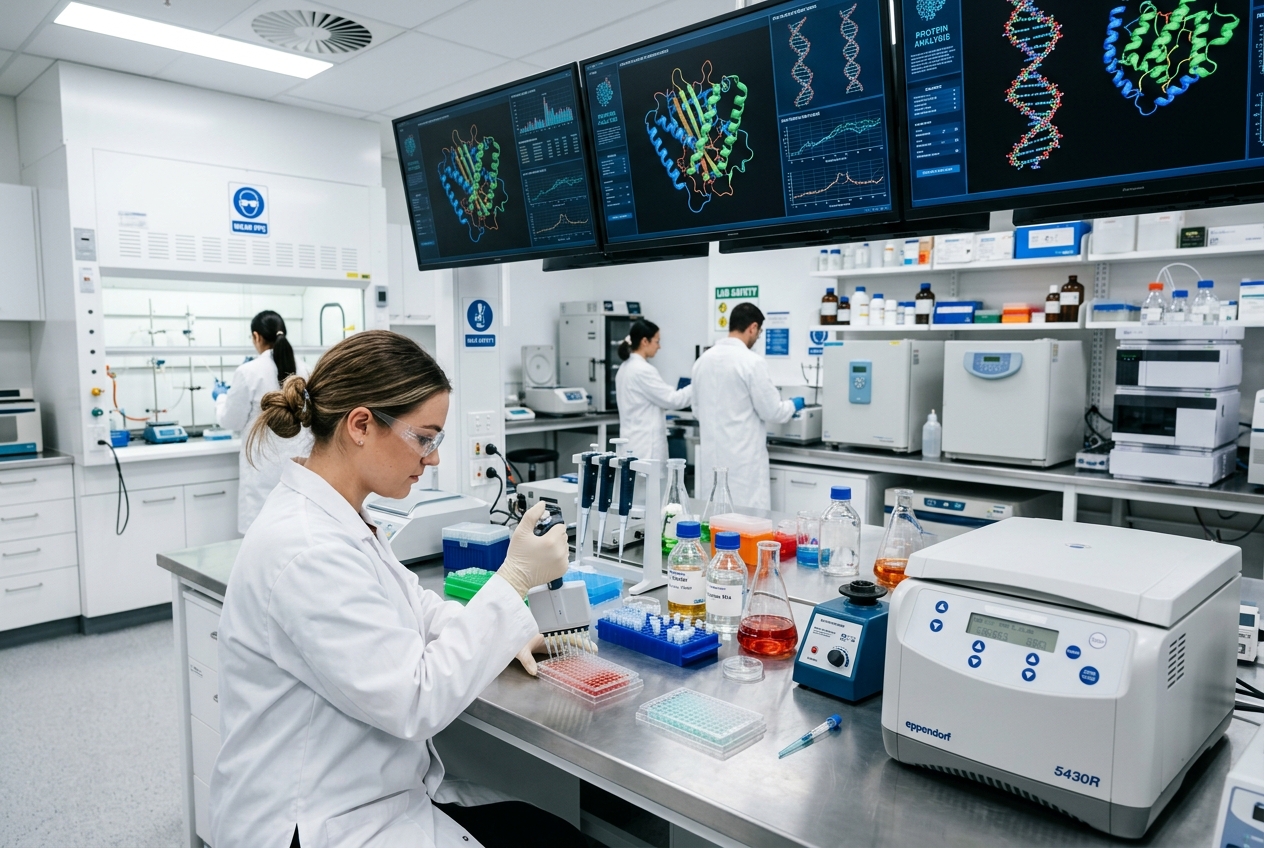
Practical Laboratory Sessions: Extensive laboratory work, instrumentation usage, and research projects mapping to real-world diagnostics.
Advanced Infrastructure: Program taught by experienced academic mentors supported by state-of-the-art laboratory instrumentation.
Year-by-Year Syllabus
Year 1: Biomolecules, Enzymology & Metabolic Pathways
In-depth study of carbohydrates, proteins, lipids, and nucleic acids. Comprehensive study of enzyme kinetics, regulation of major metabolic pathways (glycolysis, citric acid cycle, lipid and nitrogen metabolism), and bio-molecular structure analysis.
Year 2: Molecular Biology, Immunology & Biochemical Techniques
Detailed study of replication, transcription, translation, genetic engineering, diagnostic immunology (ELISA, Western Blotting, flow cytometry), and clinical instrumentation techniques (chromatography, electrophoresis, spectrophotometry).
Year 3: Clinical Biochemistry, Diagnostics & Research Dissertation
Exploration of organ function tests (liver, kidney, gastric), clinical endocrinology, metabolism in diseases, quality control in clinical laboratories, and execution of an original research dissertation project/thesis.
Program Fee Details
A transparent breakdown of the investment in your future.
S.No
Fee Details
Amount
1
Tuition Fee
Rs 54,000 /- ( per Semester )
2
Examination Fee
Rs 9,000 /- ( per Year )
3
Lab Charges
Rs 1,000 /- ( per Year )
4
Convocation Charges
Rs 2,500 /- ( One Time )
5
Alumni Charges
Rs 500 /- ( One Time ) in all programs
Career Pathways
The program prepares graduates for careers in diagnostics, healthcare research, and biotechnology industries. Common career pathways include: